


Why engage a strata manager early in the development process?
Engaging an experienced strata manager early in the development process, even before the Development Application (DA) stage, is invaluable. Involving a reputable strata manager with firsthand experience in managing similar developments offers crucial insights that contribute to the successful establishment of a strata scheme, enhance the client experience, and provide...

Strata Managers vs. Building Managers: What is the Difference?
In the context of strata living, the roles of Strata Managers and Building Managers can sometimes get confused, leaving owners and residents unsure of where to direct their enquiries. Who manages the Annual Fire Safety Statement? Who do I go to if repairs need to be made to common property?...

Initial Budgeting: How hard is it to get initial cost and levy estimates right?
Quite topical and in the cross hairs of strata legislators and consumer lobby groups is a way to bring greater accountability for initial budgets, most notably in the levy estimates presented as part of sales campaigns and at initial strata meetings. This is necessary as levy estimates form an important...

Parking in Strata: Dealing with Disputes Over Visitor Parking Spaces
The misuse of visitor parking continues to be a popular point of contention for owners and residents living in strata communities. With good, free parking hard to come by in Sydney, there’s always the temptation for residents with more than one vehicle to use visitor parking spaces for overflow, rather...

Strata Q&A: Ask the Expert #06
With the establishment of the NSW Strata Hub online portal managed by NSW Fair Trading, Strata Choice completed its client reporting obligations on 31st December 2022 as set out in the Strata Schemes Management Amendment (Information) Regulation 2021 (Information Regulation). Schemes that have not undertaken the process must comply by...

10 Tips for Resolving Building Defects
Too often developers and Owners Corporations end up at 10 paces facing off through lawyers to resolve building defects. It’s expensive, takes a toll on relationships, and the final pill ends up difficult to swallow for all sides. New owners feel their prized asset is devalued and the reputation of...

Using Portable Barbecues in Strata Buildings
The Australian BBQ – a beloved summertime tradition that has been ingrained in our very culture. Over the years, it has evolved from being a mere cooking method to a catalyst for bringing people together. It's where stories are shared, laughter resonates, and the joy of good food is savoured....

New Year’s Resolutions: Setting Goals for Better Strata Living
It’s a common tradition around this time of year to reflect on the last 12 months and set new goals for the year ahead. Most New Year’s resolutions come down to exercising more or giving up a bad habit, but if you’re an apartment owner living in a strata scheme,...

Handling Noisy Neighbors in NSW Strata
In the close quarters of community living, noise can become a significant concern. The tranquility of one's home is a fundamental right, yet the threshold for what constitutes disruptive noise can vary greatly from person to person. Addressing such issues often require a combination of direct communication, tact, understanding, knowing...
Strata Q&A: Ask the Expert #05
With the establishment of the NSW Strata Hub online portal managed by NSW Fair Trading, Strata Choice completed its client reporting obligations on 31st December 2022 as set out in the Strata Schemes Management Amendment (Information) Regulation 2021 (Information Regulation). Schemes that have not undertaken the process must comply by...

Unlocking EV-Ready Apartment Buildings with NSW Government Grant
The winds of change are blowing through the automotive industry and it's clear that electric vehicles (EVs) are here to stay. In New South Wales, EVs represented 8% of new car sales in the first half of 2023 and that number is only expected to rise. With this shift in...
Strata Q&A: Ask the Expert #04
With the establishment of the NSW Strata Hub online portal managed by NSW Fair Trading, Strata Choice completed its client reporting obligations on 31st December 2022 as set out in the Strata Schemes Management Amendment (Information) Regulation 2021 (Information Regulation). Schemes that have not undertaken the process must comply by...

To BMC or not to BMC – that is the question
Stuart Denney, our Associate Director of New Developments at Strata Choice shares his thoughts on to BMC or not to BMC. Great interaction and vibrant community is the product of mixed-use strata developments done well. The mix of uses in strata communities is ever expanding with residential, affordable and social housing, commercial, serviced...
Strata Q&A: Ask the Expert #03
With the establishment of the NSW Strata Hub online portal managed by NSW Fair Trading, Strata Choice completed its client reporting obligations on 31st December 2022 as set out in the Strata Schemes Management Amendment (Information) Regulation 2021 (Information Regulation). Schemes that have not undertaken the process must comply by...

6 Key Takeaways from Our Latest First AGM
Recently the team at Strata Choice had the privilege of attending the First Annual General Meeting of a remarkable development situated in the heart of Macquarie Park. This milestone event is a barometer to how owners have experienced taking possession of their new homes and investments. The “FAGM” (as we like...
Strata Q&A: Ask the Expert #02
With the establishment of the NSW Strata Hub online portal managed by NSW Fair Trading, Strata Choice completed its client reporting obligations on 31st December 2022 as set out in the Strata Schemes Management Amendment (Information) Regulation 2021 (Information Regulation). Schemes that have not undertaken the process must comply by...

Improving the Longevity of Waterproofing
Have you ever questioned the longevity of your waterproofing system? In one of our recent articles, "Rising Costs: A Burden on Owners," we highlighted a concerning statistic from a 2021 report on defects in New South Wales. The report revealed that a significant 39 per cent of residential apartment buildings constructed...

Rising Costs: A Burden on Owners
Australia is in the midst of soaring living costs, and apartment owners have encountered a growing concern - the burden of rising contributions to their shared community. In the past year, levies have seen a significant uptick, with increases averaging around 15 to 20 percent. These can be attributed to...
Strata Q&A: Ask the Expert #01
With the establishment of the NSW Strata Hub online portal managed by NSW Fair Trading, Strata Choice completed its client reporting obligations on 31st December 2022 as set out in the Strata Schemes Management Amendment (Information) Regulation 2021 (Information Regulation). Schemes that have not undertaken the process must comply by...

NSW Strata Hub Reporting Obligations Deadline
With the establishment of the NSW Strata Hub online portal managed by NSW Fair Trading, Strata Choice completed its client reporting obligations on 31st December 2022 as set out in the Strata Schemes Management Amendment (Information) Regulation 2021 (Information Regulation). Schemes that have not undertaken the process must comply by...
The Strata Insurance Market in 2023
The Strata Insurance Market is a complex environment. Insurers have been dealt a significant blow in recent years by the Queensland and NSW Floods, with approximately $5.74b in claims made. Insurers are taking decisive action to recoup losses from natural disasters and other claims, such as raising premiums or deductibles,...
Strata Choice Achieves Significant Savings on Lift Maintenance Contracts
Last year, we invited all buildings with lifts to join in a Bulk Renegotiation to streamline lift maintenance contracts. With this project, our goal was threefold: standardise terms of service and associated fees, guarantee comprehensive coverage throughout the contract, and strengthen negotiation power when establishing new contracts by consolidating expiration dates....

Avoid Water Damage Caused by Flexible Braided Hoses
Flexible braided hoses are a common sight in many Australian homes; however, few people realise that these seemingly innocuous components can lead to catastrophic flooding and costly repairs if they burst or fail. Water damage insurance claims are a contributing factor in rising insurance costs and as such, repairs to flexible...
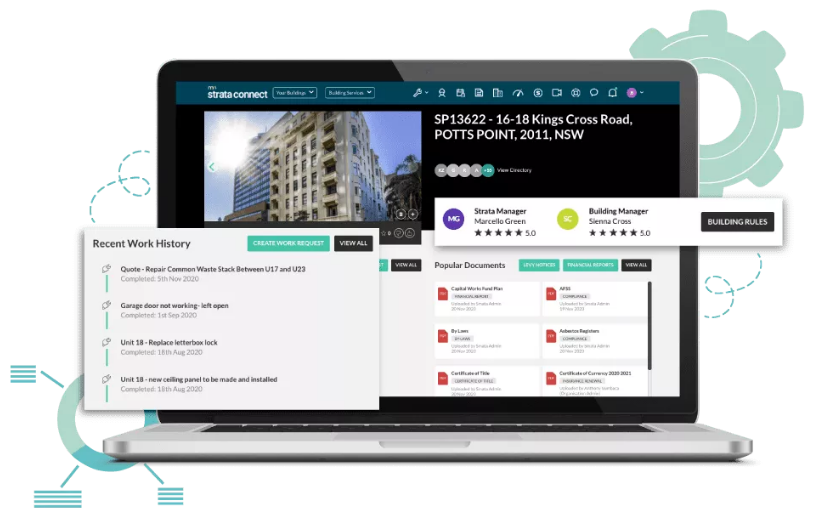
Harnessing Technology for Strata Committee Members and Owners
Strata Choice is a technologically progressive business that provides up-to-date technology to make life easier for owners and Strata Committees. This technology provides real-time information with self-service capabilities. By harnessing this technology, Strata Choice offers efficient, effective customer focussed service that meets customers' expectations today and into the future. The Benefits...

Pets in Apartments
As community living increases it is important to note that by-laws are the fundamental building blocks of how a scheme manages its affairs. Simply, by-laws bind owners and residents to their terms and regulate the use of the common property and Lots, none more so than what you may keep...